
SMAS Facelift Bellevue
The SMAS facelift in Bellevue is a refined, anatomically targeted approach to lifting the lower face and jawline by repositioning the superficial musculoaponeurotic system — the structural layer beneath the skin that, with time, descends and softens the jawline.
 [ PROCEDURE · OVERVIEW ]
 What is SMAS Facelift Bellevue?
The SMAS facelift is a category of facelift that addresses the deeper supportive layer of the face. Beneath the skin and subcutaneous fat sits a continuous fibromuscular sheet — the superficial musculoaponeurotic system, or SMAS — that connects the platysma in the neck to the muscles of facial expression and the temporal fascia above. As this layer loses tone and descends with age, the cheek pad falls, the jawline blurs, and a jowl forms at the corner of the mandible. A SMAS facelift lifts and resets that layer rather than only tightening overlying skin, which is why results read as natural rather than pulled.
Several SMAS variants exist in the modern facelift literature — SMAS plication (folding the layer onto itself with sutures), SMAS imbrication (overlapping a strip of SMAS), SMASectomy (removing a wedge of SMAS along the cheek-jowl boundary and reapproximating the edges), and the high-SMAS or extended-SMAS approaches that release the layer more aggressively for stronger midface elevation. Dr. Yang selects the SMAS variant that fits the patient's tissue quality, descent pattern, and longevity goals. The Bellevue practice positions the SMAS facelift as a structural option for patients whose anatomy doesn't yet warrant a deep-plane release but who want more durable correction than skin-only or thread approaches can provide.
The procedure is typically performed under intravenous sedation with local anesthesia or under general anesthesia depending on patient preference, comorbidities, and whether ancillary procedures are combined. Operative time generally runs three to four hours.
Ideal Candidates
A SMAS facelift in Bellevue is most often considered by patients in their late 40s through 60s who have early to moderate jowling and lower-face laxity, generally good skin elasticity, and a healthy soft-tissue envelope. Candidates typically describe their concern as a softening jawline rather than a deeply hollow midface, and they want correction that holds without altering the way their face moves or expresses emotion. Albert Yang, MD reviews medical history, current medications, prior facial procedures, smoking status, and skin condition during consultation to confirm fit.
Patients who may not be ideal candidates include those with severe midface descent and deep nasolabial folds — these patterns are often better served by a deep-plane facelift, which mobilizes the entire midface composite rather than the SMAS alone. Active smokers, patients with uncontrolled hypertension, those on medications that interfere with healing, and patients with unrealistic expectations about what a single procedure can accomplish are typically asked to address those factors before surgery is scheduled. Patients seeking dramatic reversal of advanced photoaging, severe skin redundancy, or significant volume loss are usually counseled toward a combined plan that may include a deeper facelift technique, fat transfer, eyelid surgery, or skin resurfacing — sequenced thoughtfully rather than packed into one operation.
The consultation also covers candidacy for a less invasive alternative. Some patients arrive expecting a SMAS facelift and leave with a recommendation for a mini facelift, while others discover the deep-plane approach better matches their anatomy. Dr. Yang's role is to recommend the smallest procedure that delivers the result, not the largest procedure available.
The Procedure & Technique
A SMAS facelift at the Bellevue practice begins with careful preoperative markings made with the patient seated upright so gravity-dependent landmarks — the jowl, cervicomental angle, malar fat pad position — are accurate. Incisions are designed in the natural creases of the temporal hairline, around the contour of the ear (typically along the tragal margin or pretragal crease, individualized to the patient's anatomy), and into the postauricular sulcus, often extending a short distance into the occipital hairline when neck work is included.
After the incision, a skin flap is elevated in the subcutaneous plane. The amount and direction of skin undermining is calibrated to give access to the SMAS without over-thinning the flap. Once the SMAS layer is exposed, Dr. Yang's approach mirrors the standard SMASectomy or plication technique appropriate to the patient — either excising a strategic wedge of SMAS along the cheek-jowl line and re-approximating the edges with secure suture, or folding the SMAS upward and posteriorly with permanent sutures to advance the deeper tissue. The vector of pull is set vertically and slightly posteriorly, restoring the natural orientation of the cheek-jaw junction rather than horizontalizing the result. When the platysma in the neck contributes to the appearance, a corset platysmaplasty or limited platysmal work can be added through the same access.
Once the deep layer is set, redundant skin is redraped — not stretched — and trimmed conservatively. The wound is closed in layers with fine sutures along the visible margins; small drains may be used briefly. Dressings are placed, and the patient is recovered in a monitored setting before being discharged the same day or, occasionally, after an overnight observation stay depending on the operative plan.
Recovery & Timeline
Recovery from a SMAS facelift in Bellevue follows a predictable arc, though every patient heals on a slightly different timeline. The first 48 to 72 hours typically involve the most swelling and the tightest sensation across the cheek and neck. Most patients describe the discomfort as pressure or tightness rather than sharp pain, controlled with oral medication. A light compressive dressing or chin strap is generally worn during the early phase to help skin redrape evenly.
By the end of week one, sutures are removed at a follow-up visit and most bruising has shifted from purple toward yellow. Many patients begin to feel comfortable in private settings — light walking, low-stimulation work from home, gentle showers — though visible bruising and residual swelling along the jaw and neck typically persist. By two weeks, the majority of patients return to public activities such as office work, social outings with light makeup, and short errands; subtle swelling and a slight firmness at the incision lines often remain.
Between weeks three and six, the firmness softens and the contour of the jawline becomes increasingly defined. Most patients return to moderate exercise around three to four weeks and to full unrestricted activity, including resistance training, around six weeks. Sensation along the ear and lateral cheek can feel altered (numbness, tingling) for several months; this resolves gradually as small sensory branches recover. Final settling of the result — the point at which the face looks like itself again, only refreshed — typically takes three to six months.
 [ EXPECTED RESULTS ]
 Expected Results
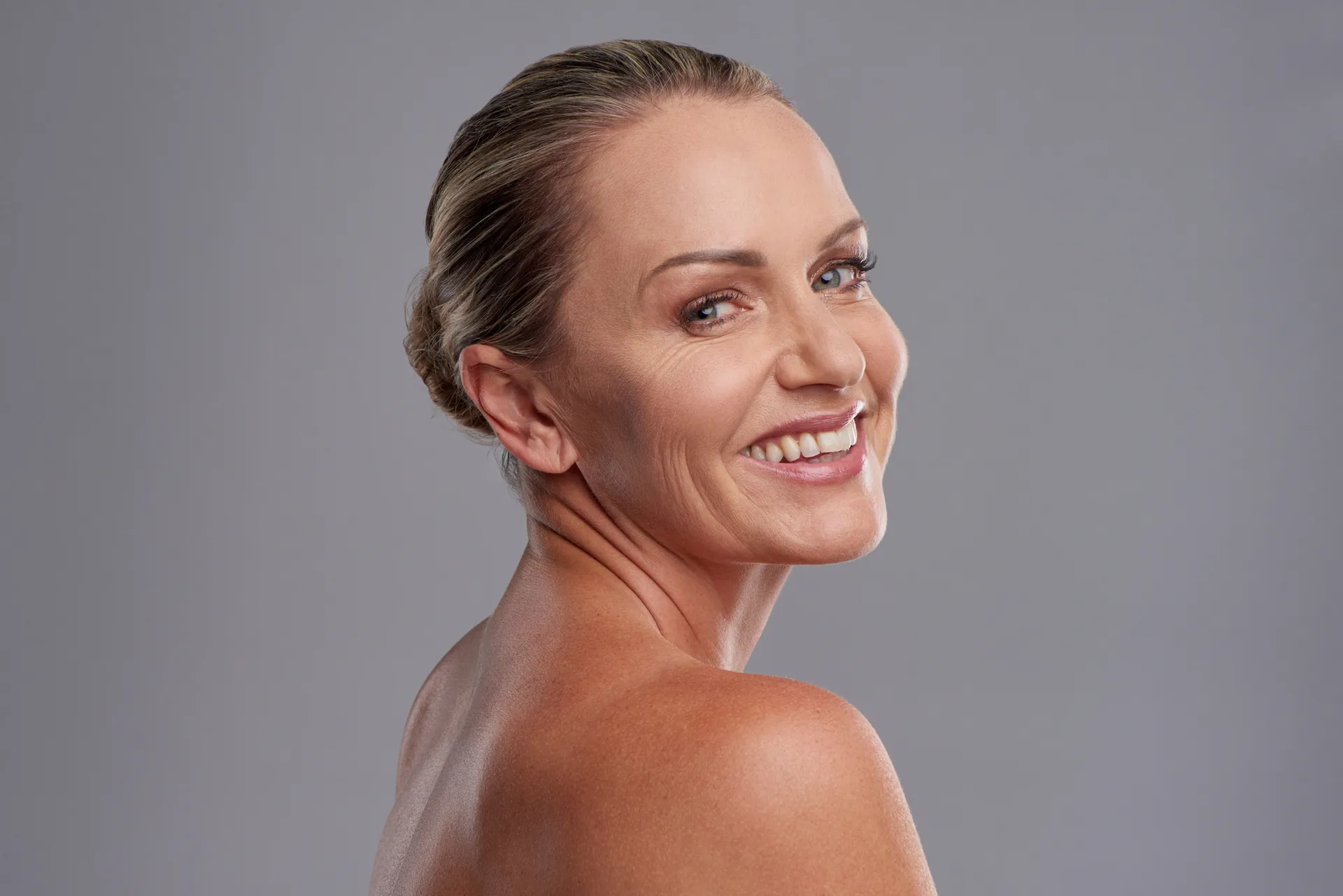
Most patients who undergo a SMAS facelift with Albert Yang, MD experience a softer, more defined transition from cheek to jaw, reduced jowl prominence along the lower mandible, and a tightened upper neck contour. Because the lift is anchored to the structural SMAS layer rather than to skin alone, the result tends to read as a "well-rested" version of the patient — recognizable, expressive, and proportional — rather than as a face that has been pulled.
In terms of longevity, peer-reviewed facelift literature suggests SMAS-based facelift results typically remain visibly meaningful for roughly seven to ten years, with the underlying aging process continuing at a normal pace from the new baseline. The skin will continue to age, fat will continue to redistribute, and bony changes proceed as they would have without surgery — but patients consistently look refreshed compared with where they would have been without the lift. Maintenance with non-surgical treatments such as neuromodulators, fillers, energy-based skin care, or fat transfer can extend and complement the surgical result over time.
Outcomes vary based on tissue quality, age, smoking status, sun exposure history, and adherence to recovery instructions. Dr. Yang frames the conversation around what is realistic for the individual patient at the consultation rather than around generalized averages.
Risks & Considerations
Every surgical procedure carries risk, and a SMAS facelift is no exception. Bleeding and hematoma are the most common early complications and are addressed promptly when they occur — risk is reduced by stopping blood-thinning medications and supplements per the practice's preoperative protocol and by avoiding strenuous activity early in recovery. Infection is uncommon when standard antiseptic technique and postoperative antibiotics are observed.
Other recognized risks include temporary or, rarely, prolonged numbness in the cheek and ear region; transient weakness of branches of the facial nerve (most often the marginal mandibular and frontal branches), which usually resolves within weeks; visible scarring at incision lines (designed to fall in natural creases but variable based on individual healing and skin type); skin flap healing problems, more common in active smokers; asymmetry, which may settle with time or rarely require minor revision; and hairline distortion when temporal incisions are not respected. Hypertrophic scarring or keloid formation can occur in patients predisposed to those responses.
Realistic expectation-setting is itself a form of risk management. A facelift improves contour; it does not stop time, replace volume that has been lost, or correct skin texture and pigment changes. Patients with concerns in those domains should discuss adjunctive non-surgical options before the day of surgery so the overall plan is coherent.
Questions about SMAS Facelift Bellevue?
Talk with Dr. Yang.
Frequently Asked Questions
How is a SMAS facelift different from a deep-plane facelift?+
A SMAS facelift lifts the superficial musculoaponeurotic system — the deeper supportive layer beneath the skin — through plication, imbrication, or SMASectomy. A deep-plane facelift releases the SMAS-platysma composite from the underlying tissues entirely and repositions the midface as a single unit. Deep-plane techniques tend to provide stronger correction in patients with significant midface descent and prominent nasolabial folds, while SMAS approaches are often well suited to mild-to-moderate laxity. The right choice is anatomy-driven, which is why candidacy is reviewed individually at consultation.
How long does a SMAS facelift last?+
Peer-reviewed facelift literature suggests SMAS-based results typically remain visibly meaningful for about seven to ten years. The underlying aging process continues from a refreshed baseline rather than restarting, so patients usually look better than they would have without surgery for many years afterward. Skin care, sun protection, healthy lifestyle, and complementary non-surgical maintenance — neuromodulators, energy-based devices, and selective filler — can extend the perceived longevity of the result.
How long is recovery from a SMAS facelift?+
Most patients return to office work in roughly 10 to 14 days, to moderate exercise at three to four weeks, and to full unrestricted activity at about six weeks. Visible bruising typically resolves within two to three weeks, while subtle swelling and firmness along incision lines may take three to six months to fully settle. Recovery varies with age, tissue quality, and adherence to postoperative instructions; specific timelines are reviewed in detail at the preoperative visit.
Will a SMAS facelift make my face look pulled?+
A well-executed SMAS facelift should not look pulled. Because the lift is anchored to the deeper SMAS layer rather than to skin tension, the vector of correction works with the natural anatomy of the cheek-jaw junction. Skin is redraped without stretch and trimmed conservatively. The goal is a refreshed, recognizable face with a softer transition from cheek to jaw — not an altered identity. Outcomes that read as "operated" are usually the result of skin-tension-based lifts or over-aggressive vectors, not SMAS-anchored work.
What anesthesia is used for a SMAS facelift?+
A SMAS facelift in Bellevue is typically performed under intravenous sedation with local anesthesia or under general anesthesia, depending on patient preference, the scope of the procedure, any combined work, and medical history. Both options are administered by experienced anesthesia providers in an accredited surgical setting. The choice is reviewed at the preoperative visit; most patients are comfortable with either approach once the rationale is explained.
Can a SMAS facelift be combined with other procedures?+
Yes. SMAS facelifts are commonly combined with neck work (such as platysmaplasty or submental liposuction), eyelid surgery, brow lift, fat transfer, or skin resurfacing. Combining procedures is appropriate when the patient's overall plan calls for it and total operative time, anesthesia exposure, and recovery burden remain reasonable. The practice plans combinations conservatively — the safest combinations address adjacent areas without dramatically extending operative time or compromising healing.
When can I see a final result after a SMAS facelift?+
A reasonable estimate is that 70 to 80 percent of the result is visible by six weeks; the remaining 20 to 30 percent settles between three and six months as deep-tissue swelling resolves and incision lines mature. Photography taken at the six-month mark generally reflects the final contour. Dr. Yang reviews progress at staged postoperative visits and is candid about what is settling versus what is final at each stage.
Serving Bellevue & the Eastside
The SMAS facelift at Albert Yang Facial Plastic Surgery serves patients across the Eastside. The practice is located at 15600 NE 8th St, Suite A-8, Bellevue, WA 98008. Drive times below reflect typical non-rush conditions to the Bellevue clinic.
Bellevue+
Bellevue patients arrive at the clinic in minutes and benefit from the closest possible follow-up cadence after a SMAS facelift. Same-day suture checks, drain removal at 24 to 48 hours when used, and the early-week postoperative visits are easy to fit around in-city routines. Bellevue residents who live close to the clinic also have the option of resting at home immediately after surgery rather than booking a recovery suite, which many patients prefer for the privacy and continuity of post-SMAS-facelift recovery.
Clyde Hill+
Clyde Hill is a 5- to 8-minute drive to the Bellevue practice. SMAS facelift candidates from Clyde Hill often appreciate the option of an unhurried consultation, with imaging and exam time built into the visit. Postoperative visits are easy to coordinate around personal and professional schedules. For Clyde Hill patients who travel for work, the practice offers virtual check-ins for later-stage SMAS-facelift recovery once initial wound healing has been confirmed at the in-clinic visits.
Medina+
Medina is 5 to 8 minutes from the Bellevue practice. Patients considering a SMAS facelift in Bellevue from Medina value the short drive on the day of surgery and during the early follow-up window. The practice maintains a calm, private clinic environment and can stagger appointment times for Medina patients who prefer to enter and exit the office discreetly. For later SMAS-facelift recovery visits, virtual review is available when healing is on track.
Issaquah+
Issaquah patients reach the Bellevue clinic in roughly 15 to 20 minutes via I-90. For SMAS facelift candidates, this is well within the comfortable range for a same-day surgical procedure with a planned ride home. The practice schedules the early postoperative visits in person and offers virtual review for later check-ins where appropriate. Issaquah patients often combine the consultation and pre-operative visit on a single trip to limit travel during the planning phase of a SMAS facelift.
Mercer Island+
Mercer Island patients reach the Bellevue clinic in roughly 8 to 12 minutes via I-90, making the SMAS facelift consultation, surgery day, and weekly follow-ups straightforward. The practice can coordinate ride arrangements for the day of surgery, since driving is not appropriate during the first one to two weeks. Mercer Island's quiet residential streets are well suited to the slow walks Dr. Yang encourages during the early SMAS facelift recovery window to support gentle circulation without strain.
Sammamish+
Sammamish patients reach the Bellevue clinic in roughly 12 to 18 minutes via I-90 or SR-202. SMAS facelift consultations can be scheduled in a single appointment block to limit travel. For postoperative visits, the practice schedules early-week checks in person and offers virtual review for the third- and fourth-week visits when wound healing allows. Sammamish patients planning a SMAS facelift often combine the surgery date with a few days of focused at-home recovery before returning to local routines.
Redmond+
Redmond patients reach the Bellevue clinic in approximately 12 to 15 minutes via SR-520. SMAS facelift consultations are typically scheduled in a single block to reduce travel, and the early postoperative visits — suture removal, drain checks where applicable, and the first contour assessment — are kept in person. The practice offers virtual follow-ups for Redmond patients in the third and fourth postoperative weeks when wound healing permits, keeping recovery on track without unnecessary driving during peak commute windows.
Yarrow Point+
Yarrow Point sits roughly 5 to 7 minutes from the Bellevue clinic, an easy approach for SMAS facelift consultations and for the close-cadence postoperative checks during the first two weeks. Many Yarrow Point patients prefer in-person visits throughout recovery; for those traveling or working, the practice can convert later check-ins to a virtual format once incisions are stable. Yarrow Point's discreet, residential character makes early SMAS-facelift recovery comfortably private.
Hunts Point+
Hunts Point is approximately 5 to 7 minutes from the Bellevue clinic by car. The proximity is well suited to SMAS facelift recovery, which benefits from frequent short check-ins during the first two weeks. Hunts Point patients can keep follow-ups close, take quiet walks at home, and avoid the stress of a long drive while bruising and swelling resolve. The practice tailors the postoperative cadence to each patient's healing trajectory after a SMAS facelift, so visit frequency tapers naturally as recovery progresses.
Kirkland+
Kirkland is roughly 12 to 15 minutes from the Bellevue clinic via I-405. SMAS facelift candidates from Kirkland often prefer to schedule consultation, surgery, and key follow-ups outside peak commuting hours; the practice accommodates these requests where possible. Virtual check-ins are available after the second postoperative week when in-person review of wound healing is no longer time-sensitive, allowing Kirkland patients to focus on rest rather than logistics during the most active phase of SMAS-facelift recovery.
Related Procedures
If you are considering a SMAS facelift, the practice often discusses adjacent options that may better match your anatomy or your goals.
Deep Plane Facelift
A deeper release of the SMAS-platysma composite for patients with greater midface descent and pronounced nasolabial folds.
Facelift
The general overview of facelift options at the Bellevue practice, helpful for patients still narrowing their decision.
Mini Facelift
A smaller-incision approach for patients with earlier laxity who do not yet warrant a full SMAS or deep-plane procedure.