
Otoplasty / Ear Shaping Bellevue
Otoplasty in Bellevue — also called ear shaping or ear pinning — is a refined surgical procedure that reshapes the cartilage of the external ear to address prominence, asymmetry, or absent natural folds.
 [ PROCEDURE · OVERVIEW ]
 What is Otoplasty / Ear Shaping Bellevue?
Otoplasty is a surgical procedure that reshapes the cartilage framework of the external ear (the auricle). The most common indications are prominent ears — ears that project further from the side of the head than normal — and asymmetry between the two ears. Two anatomic features are most often responsible:
- An underdeveloped or absent antihelical fold — the natural curve in the upper third of the ear. When this fold is shallow or absent, the ear cartilage flares outward.
- An over-projected concha — the deep bowl of the ear closest to the head. When the conchal bowl is too deep or rotated outward, the entire ear projects.
Otoplasty addresses one or both of these structural drivers, depending on the patient's anatomy. For Bellevue and Eastside patients, the result is an ear that sits in normal proportion to the head and is not the first thing a stranger notices. Albert Yang, MD's approach in Bellevue mirrors the standard contemporary otoplasty technique described in current peer-reviewed facial plastic surgery literature: cartilage scoring or suturing to recreate the antihelical fold, conchal setback or reduction when indicated, and conservative repositioning rather than aggressive cartilage removal.
Ideal Candidates
Otoplasty in Bellevue is appropriate for two distinct candidate groups:
Adolescent candidates (typically ages 6–17). By age 5 or 6, the cartilage framework of the ear has reached approximately 85–90% of adult size, which makes this the youngest age at which otoplasty is generally considered. Many parents elect surgery before the school-age teasing window opens. Adolescent candidates should:
- Have ears that have reached near-adult size
- Be healthy and free of significant medical or otologic conditions
- Be motivated and able to participate in the consultation and post-operative care (the procedure is generally elective, and the child's understanding matters)
- Have realistic expectations and a parent who shares those expectations
Adult candidates. Adults of any age can be excellent candidates for otoplasty, particularly those who have always been self-conscious about prominent or asymmetric ears and have decided to address it permanently. Adult candidates should be in generally good health, not smoke (or be willing to stop several weeks before and after surgery), and have realistic expectations about what is anatomically achievable.
Otoplasty is not appropriate for every patient. Patients with active ear infections, very thin or fragile cartilage, prior unaddressed traumatic ear deformity, or unrealistic expectations are candid declines. Children whose ears have not yet reached adult size are deferred. The consultation in Bellevue is structured to identify the right surgical plan — or to recommend deferring surgery — based on the actual anatomy and the patient's goals.
The Procedure & Technique
Otoplasty at the Bellevue practice is performed under general anesthesia, deep IV sedation, or local anesthesia with sedation, depending on the patient's age and preference. Adolescents most often have the procedure under general anesthesia; adults can typically have local-with-sedation. The procedure typically takes 1.5 to 3 hours, depending on whether one ear or both ears are addressed.
The incision is placed in the natural crease behind the ear (the post-auricular sulcus), where it is well-hidden once healed. From this incision, the surgeon accesses the cartilage of the ear and addresses the structural drivers of prominence:
- Recreating or strengthening the antihelical fold. This is typically done with one of two technique families. The first uses cartilage-scoring approaches (Stenström, Mustardé-modified) to weaken the anterior cartilage so it folds naturally. The second uses horizontal mattress sutures placed in the cartilage to create and hold the fold. Many contemporary surgeons combine the two for a more durable result.
- Conchal setback. When the conchal bowl is over-projected, the surgeon can either reposition it closer to the head with sutures (Furnas conchomastoid sutures) or, when needed, conservatively reduce conchal cartilage.
- Lobule positioning. When the earlobe also projects, additional sutures or skin excision can address this.
The post-auricular incision is closed in layers. A protective dressing is applied to the ears and a head wrap is worn for the first several days. Albert Yang, MD's approach in Bellevue mirrors this contemporary technique, with emphasis on conservative cartilage handling and a natural-looking result that doesn't read as over-pinned.
Considering Otoplasty / Ear Shaping Bellevue in Bellevue?
Recovery & Timeline
Recovery from otoplasty is generally well-tolerated, and the visible recovery is faster than many patients expect because the incisions are hidden behind the ear. The general timeline most Bellevue and Eastside patients can plan around is:
- Day 0–3: A protective head wrap is worn at all times. Mild to moderate pain managed with prescribed medication. Sleeping on the back with the head elevated is important to avoid pressure on the ears.
- Day 5–7: First post-op visit. Head wrap is typically replaced with a soft headband worn at night. Sutures behind the ear may be removed.
- Day 7–10: Most patients return to school or office-based work. The ears look noticeably less swollen.
- Day 14: Headband-at-night protocol typically continues for several weeks. Most external swelling has resolved.
- Week 3–4: Normal daytime activity. Contact sports and any activity that risks ear trauma should be avoided through week 6.
- Week 6: Return to all activity is generally appropriate.
- Month 3–6: Final scar maturation behind the ear. Final ear shape is fully visible.
Bellevue patients are typically seen at 1 week, 2 weeks, 6 weeks, and 3 to 6 months for in-person follow-ups, with virtual touchpoints between visits as appropriate. Adolescent patients are followed with particular attention to compliance with the headband protocol and avoidance of contact sports during the cartilage-stabilization window.
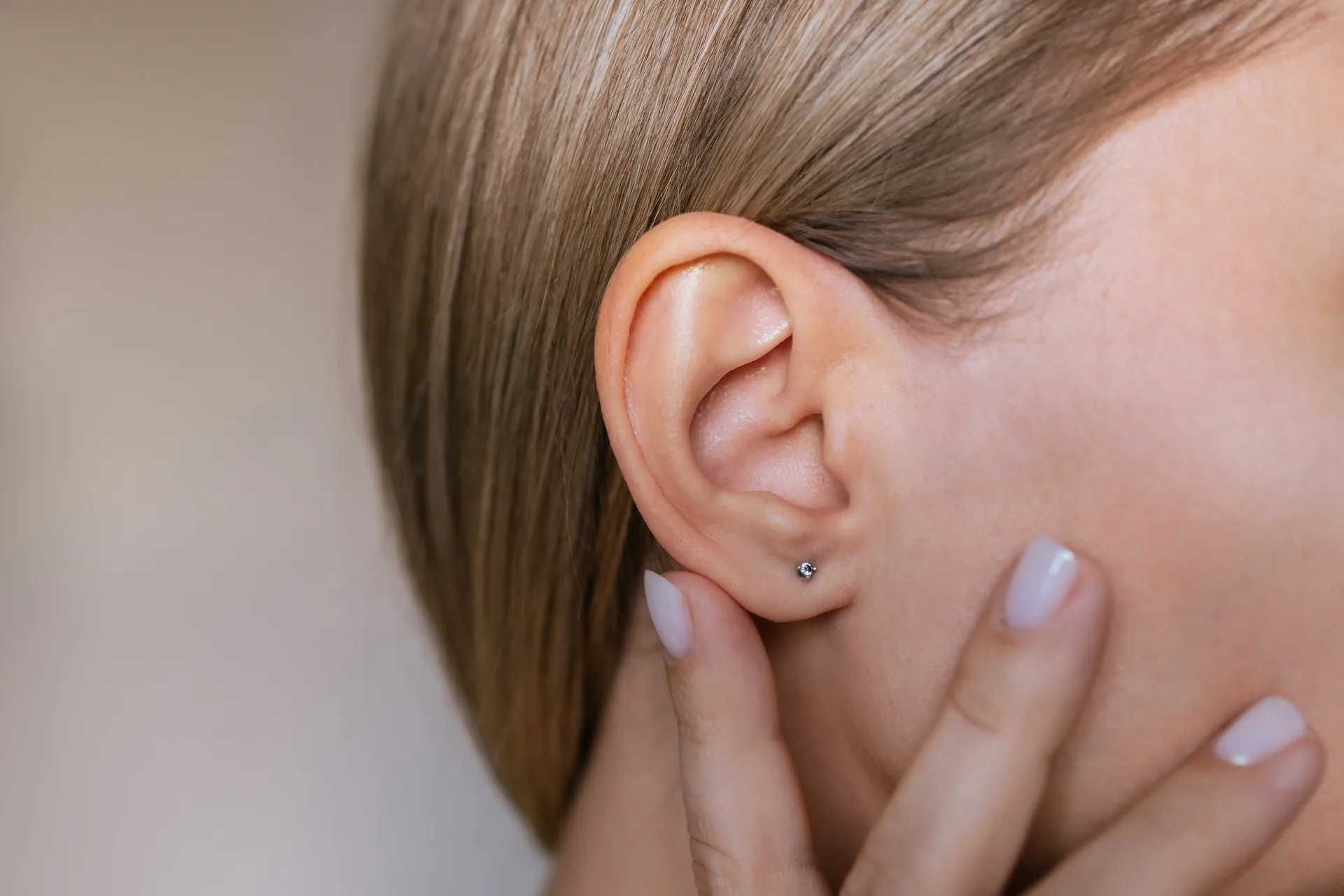 [ EXPECTED RESULTS ]
 Expected Results
A well-executed otoplasty produces an ear that sits in normal proportion to the head — not pinned flat, not over-rotated, and not visibly different in shape from a naturally proportioned ear. Most patients experience meaningful reduction of ear prominence, restoration of the antihelical fold's natural curve, and improved symmetry between the two ears.
Longevity is one of otoplasty's defining advantages. Once the cartilage has been reshaped and the sutures or scoring have stabilized the new position, the result is durable. Most patients see results that look natural at 1 year and remain consistent for the rest of their life. Children whose ears continue to grow slightly into late adolescence will see proportional, not problematic, changes.
The most common complication of long-term outcome is late recurrence — the cartilage gradually returning toward its original shape — which is uncommon with appropriate technique but is the reason conservative cartilage handling and durable suture placement matter. Otoplasty does not address ear size, only ear shape and projection; patients seeking dramatic size changes have anatomically limited options.
Risks & Considerations
Every surgical procedure carries risk, and otoplasty is no exception. Most complications are minor and manageable. Possible risks include:
- Hematoma — collection of blood between the cartilage and skin; uncommon but requires prompt drainage when it occurs
- Infection — uncommon with appropriate sterile technique and antibiotic prophylaxis
- Skin or cartilage necrosis — rare; risk is significantly higher in active smokers
- Suture extrusion — sutures occasionally work their way to the surface and need to be trimmed
- Asymmetry between the two ears — minor asymmetry is common and natural; significant asymmetry is uncommon
- Recurrence of prominence — late return toward original shape; uncommon with durable technique
- Over-correction — ears pinned too close to the head, producing the "telephone ear" deformity; minimized by conservative repositioning
- Hypertrophic or keloid scarring behind the ear — uncommon but more frequent in patients with a personal or family history of keloids
- Sensitivity changes in the ear — typically temporary
- Anesthesia-related risks — discussed separately at the pre-op visit
- Dissatisfaction with the aesthetic result — minimized by candid consultation and realistic expectations
Risk discussion is part of every otoplasty consultation in Bellevue. For adolescent patients, the conversation includes both the patient and the parents.
Questions about Otoplasty / Ear Shaping Bellevue?
Talk with Dr. Yang.
Frequently Asked Questions
What is the youngest age for otoplasty?+
Most surgeons consider age 5 or 6 the earliest reasonable age for otoplasty, because by that point the cartilage framework of the ear has reached approximately 85–90% of adult size. Many parents elect surgery before the school-age teasing window opens. The pediatric consultation in Bellevue evaluates each individual child rather than relying solely on age.
Will the ears look "pinned back" or unnatural after otoplasty?+
When the procedure is conservative and the cartilage is reshaped rather than over-rotated, the ears look naturally proportioned to the head — not pinned flat. The "telephone ear" deformity (over-correction with the conchal bowl pulled too close to the head) is uncommon with modern technique and is specifically what conservative repositioning is designed to avoid. Dr. Yang's approach in Bellevue is to under-correct slightly rather than over-correct.
When can I (or my child) return to school or work after otoplasty?+
Most patients return to school or office-based work in 7 to 10 days. The post-op head wrap is typically replaced with a soft nighttime headband at the day-5 to day-7 visit, and patients can resume normal daytime activity at that point. Contact sports and activity that risks ear trauma are avoided through approximately week 6.
Is otoplasty done under general anesthesia?+
It depends on the patient. Adolescents typically have otoplasty under general anesthesia. Adults can usually have the procedure under local anesthesia with sedation, though general or deep IV sedation is also a reasonable option. The choice is reviewed at the pre-op visit.
Will there be visible scars after otoplasty?+
The incision is placed in the natural crease behind the ear (the post-auricular sulcus). Once mature, the scar is hidden in the shadow behind the ear and is not visible at conversational distance. Patients with a personal or family history of keloid scarring should mention this at the consultation, since it affects the approach.
How long do otoplasty results last?+
Once the cartilage has been reshaped and stabilized, the results are durable for life in most patients. Late recurrence — the cartilage gradually returning toward its original shape — is uncommon with appropriate technique but is the reason conservative cartilage handling and durable suture placement matter.
Can adults have otoplasty?+
Yes. Adults of any age can be excellent candidates for otoplasty, and many adult patients describe a lifelong self-consciousness that the procedure addresses permanently. Adult candidacy is decided on health and anatomy rather than age.
Serving Bellevue & the Eastside
Bellevue+
The Bellevue practice is the home base for otoplasty across the Eastside. With a 0-minute drive time for in-city patients, the clinic at 15600 NE 8th St, Suite A-8 is convenient for adolescent and adult patients alike — the multiple early follow-ups (head wrap removal, suture care, and progress checks) are easy to fit into a Bellevue routine. Adolescent patients can typically schedule otoplasty during a school break and return for short follow-up visits without missing class.
Clyde Hill+
Clyde Hill patients reach the Bellevue clinic in approximately 5 to 8 minutes via Bellevue Way and 92nd Ave NE. The short drive matters for otoplasty's early-recovery follow-ups, particularly the day-5 to day-7 head-wrap removal and suture care. Clyde Hill families often combine post-op visits with everyday errands in downtown Bellevue. Adolescent otoplasty patients return easily to nearby schools without disruption.
Medina+
Medina patients reach the Bellevue clinic in approximately 5 to 8 minutes via 84th Ave NE and Bellevue Way. The proximity is particularly valuable in the first two weeks after otoplasty, when the cartilage is stabilizing and the headband protocol is being established. Medina families often combine consultation visits and post-op follow-ups with other downtown Bellevue errands. The otoplasty procedure itself is performed in Bellevue by Dr. Yang.
Issaquah+
Issaquah is approximately 15 to 20 minutes from the Bellevue clinic via I-90 — the longest regular drive among the practice's service areas. Issaquah patients undergoing otoplasty typically come in for a single combined consultation-and-pre-op visit to reduce trips, with subsequent follow-ups scheduled with Issaquah commute patterns in mind. A hybrid in-person and virtual cadence reduces drive volume during the headband-protocol weeks of otoplasty recovery.
Mercer Island+
Mercer Island patients reach the Bellevue clinic in approximately 8 to 12 minutes via I-90 outside of rush hour. For Mercer Island families undergoing otoplasty, the proximity makes the early-week follow-ups (head wrap and headband protocol, suture removal) easy. Many Mercer Island parents prefer to schedule adolescent otoplasty over a school break. Virtual touchpoints are available for routine progress questions between in-person visits, reducing cross-bridge driving during the headband protocol weeks.
Sammamish+
Sammamish patients reach the Bellevue clinic in approximately 12 to 18 minutes, depending on traffic on I-90 or SR-520. For Sammamish families undergoing otoplasty, planning is the key: consultations and pre-op visits can be combined into a single trip, and a hybrid mix of in-person and virtual follow-ups reduces driving during the multi-week headband protocol. Many Sammamish families specifically choose the Bellevue practice for fellowship-trained otoplasty expertise.
Redmond+
Redmond patients reach the Bellevue clinic in approximately 12 to 15 minutes via SR-520 or Bel-Red Rd. For Redmond patients undergoing otoplasty, mid-morning and early-afternoon appointment slots avoid the heaviest cross-Eastside commute. The procedure's typical 7–10 day return-to-school or return-to-work window plans well around Redmond schedules. Virtual touchpoints between in-person visits help reduce drive volume during the headband protocol weeks.
Yarrow Point+
Yarrow Point sits 5 to 7 minutes from the Bellevue clinic — among the closest service areas. For Yarrow Point families undergoing otoplasty, the geographic proximity is a meaningful logistical advantage during the first week of head-wrap care and the subsequent weeks of nighttime headband use. Quick in-person check-ins fit easily into a Yarrow Point schedule, and Dr. Yang's boutique otoplasty practice functions essentially as a neighborhood resource for Yarrow Point.
Hunts Point+
Hunts Point is approximately 5 to 7 minutes from the Bellevue clinic via SR-520 — one of the most convenient service areas for otoplasty follow-ups. Hunts Point families can typically come in for a quick post-op check on the head wrap, suture line, or healing cartilage and be home within the hour. Dr. Yang's single-surgeon model means the same surgeon performs the operation and conducts every follow-up — a fit with Hunts Point's preference for continuity.
Kirkland+
Kirkland patients reach the Bellevue clinic in approximately 12 to 15 minutes via I-405. For otoplasty, Kirkland families often choose Dr. Yang for the boutique, fellowship-trained model — particularly important for pediatric otoplasty where the parents want a single surgeon designing and performing the procedure. Recovery follow-ups are arranged in-person at the Bellevue clinic, with virtual options between visits during the multi-week stabilization period.
Related Procedures
- Earlobe Repair — A separate, smaller procedure that addresses split or stretched earlobes.