
Lower Eyelid Lift / Blepharoplasty Bellevue
The lower eyelid lift — also called lower blepharoplasty — in Bellevue is a refined surgical correction of under-eye bags, hollows, and lid laxity.
 [ PROCEDURE · OVERVIEW ]
 What is Lower Eyelid Lift / Blepharoplasty Bellevue?
Lower blepharoplasty is the surgical correction of the lower eyelid for aesthetic and, when relevant, functional improvement. The lower lid is one of the most anatomically nuanced regions of the face: a thin skin envelope, an underlying orbicularis muscle, three orbital fat compartments (medial, central, and lateral), the orbital septum, and the tear-trough junction with the cheek. Aging produces a recognizable pattern — fat herniation that becomes a "bag," loss of midface support that creates the tear-trough hollow, skin laxity, and orbicularis weakness — that frequently coexist rather than appearing in isolation.
A modern lower eyelid lift is an anatomically precise operation that addresses each component a given patient actually has, rather than removing tissue uniformly. Across mainstream technique, the procedure pairs orbital-fat repositioning or conservative excision with skin-and-muscle refinement and, when indicated, lateral canthal support. Albert Yang Facial Plastic Surgery in Bellevue draws on standard transconjunctival, transcutaneous, and skin-pinch approaches selected to match each patient's anatomy.
Ideal Candidates
The right candidate for a lower blepharoplasty is, broadly, a patient bothered by some combination of under-eye bags, tear-trough hollowing, fine crepey skin, or mild lower-lid laxity. Many candidates describe being told they look tired even on well-rested days — the tell being the under-eye region rather than the upper face. Healthy adults across a wide age range are surgical candidates when anatomy and goals align.
A lower blepharoplasty is generally not the right operation when:
- The dominant concern is dynamic wrinkling of the under-eye region rather than structural change (resurfacing or neuromodulator treatment may be more appropriate);
- Significant midface descent or volume loss is the dominant problem (an Endoscopic Brow Lift or Facial Fat Transfer may take precedence);
- Significant lower-lid laxity or scleral show is present and not addressed (lid-tightening procedures such as canthopexy or canthoplasty must be incorporated);
- A history of dry eye, prior eyelid surgery, thyroid eye disease, prominent globe, or negative-vector orbit calls for a more conservative or staged plan;
- Active smoking or uncontrolled medical conditions would compromise healing.
These distinctions are made at consultation. If the more useful operation is an Upper Eyelid Lift or a different volumization or brow-lift approach, Dr. Yang will say so. That candor is part of why patients across the Eastside choose Albert Yang Facial Plastic Surgery in Bellevue.
The Procedure & Technique
A lower eyelid lift is performed under intravenous sedation with local anesthetic or, when combined with other procedures, general anesthesia. Operative time for an isolated lower blepharoplasty typically runs one to two hours.
The general technical sequence — calibrated to each patient's anatomy — includes:
- Approach selection. Two primary approaches dominate modern lower blepharoplasty. A transconjunctival approach enters from inside the lower lid, leaves no external incision, and is well suited to patients whose dominant problem is fat without significant skin excess. A transcutaneous approach uses a fine subciliary incision just below the lash line and adds direct access to skin and orbicularis. A skin-pinch can be added to either to address fine skin redundancy.
- Fat repositioning vs. conservative excision. Modern technique favors repositioning orbital fat over the orbital rim into the tear trough, where it serves as a structural filler that softens the lid-cheek junction. Where excess fat remains, a conservative excision is performed; aggressive fat removal is avoided because it produces the hollowed, "skeletonized" lower-lid appearance that is difficult to revise. Dr. Yang's approach mirrors this fat-preserving, repositioning-first philosophy.
- Orbicularis and septum management. When a transcutaneous approach is used, a skin-muscle flap or skin flap is elevated in a measured plane. The orbital septum is addressed conservatively. Aggressive septal disruption is avoided to preserve the lower lid's normal mechanics and reduce the risk of post-operative malposition.
- Lid support and canthal anchoring. Many lower-lid procedures include a canthopexy — a tightening of the lateral canthal tendon — to support the lower lid against the natural downward forces of healing and gravity. A formal canthoplasty is reserved for greater laxity. Modern lower-lid surgery treats lid support as routine rather than optional in most patients.
- Skin refinement and closure. Where skin is removed at all, it is removed conservatively. A skin-pinch — a few millimeters of skin trimmed with the lid in repose — frequently suffices. The fine subciliary incision is closed with absorbable or removable sutures and typically settles into a near-invisible line within months.
The full operation is performed by Dr. Yang from approach through closure at the practice's Bellevue clinic. There is no rotating provider model.
Considering Lower Eyelid Lift / Blepharoplasty Bellevue in Bellevue?
Recovery & Timeline
Recovery from a lower blepharoplasty is generally well tolerated, though it is real surgery on a delicate region. Individual recoveries vary; the timelines below reflect ranges commonly published in patient education.
Days 0–3. Bruising and swelling are at their peak. Cold compresses, head elevation, and limited activity are the central early-recovery instructions. Discomfort is generally low to moderate and well controlled with over-the-counter analgesia after the first 24–48 hours. Vision may feel slightly blurred from ointment use; lubricant drops are standard.
Days 4–7. Swelling and bruising migrate downward and resolve gradually. Sutures (when non-dissolvable) are typically removed at the first postoperative visit around day 5–7. Many patients are comfortable in private settings during this window but not yet in social or work-facing ones.
Days 7–14. Most patients return to office or remote-meeting work between days 10 and 14. Residual swelling persists but is increasingly camouflaged by makeup. Reading and screen work are typically comfortable; protective eyewear and sun protection are emphasized.
Weeks 2–6. Bruising fully resolves. The majority of swelling subsides and the final lid contour begins to emerge. Light cardiovascular activity is generally resumed around week 2–3 with surgeon clearance; full unrestricted activity by week 6.
Months 2–6. The fine subciliary or skin-pinch incision passes through a reddish phase and settles into a mature, fine-line scar. Tear-trough softening from fat repositioning continues to refine. Final aesthetic evaluation is at 6 months. Albert Yang Facial Plastic Surgery in Bellevue follows patients through this entire window.
 [ EXPECTED RESULTS ]
 Expected Results
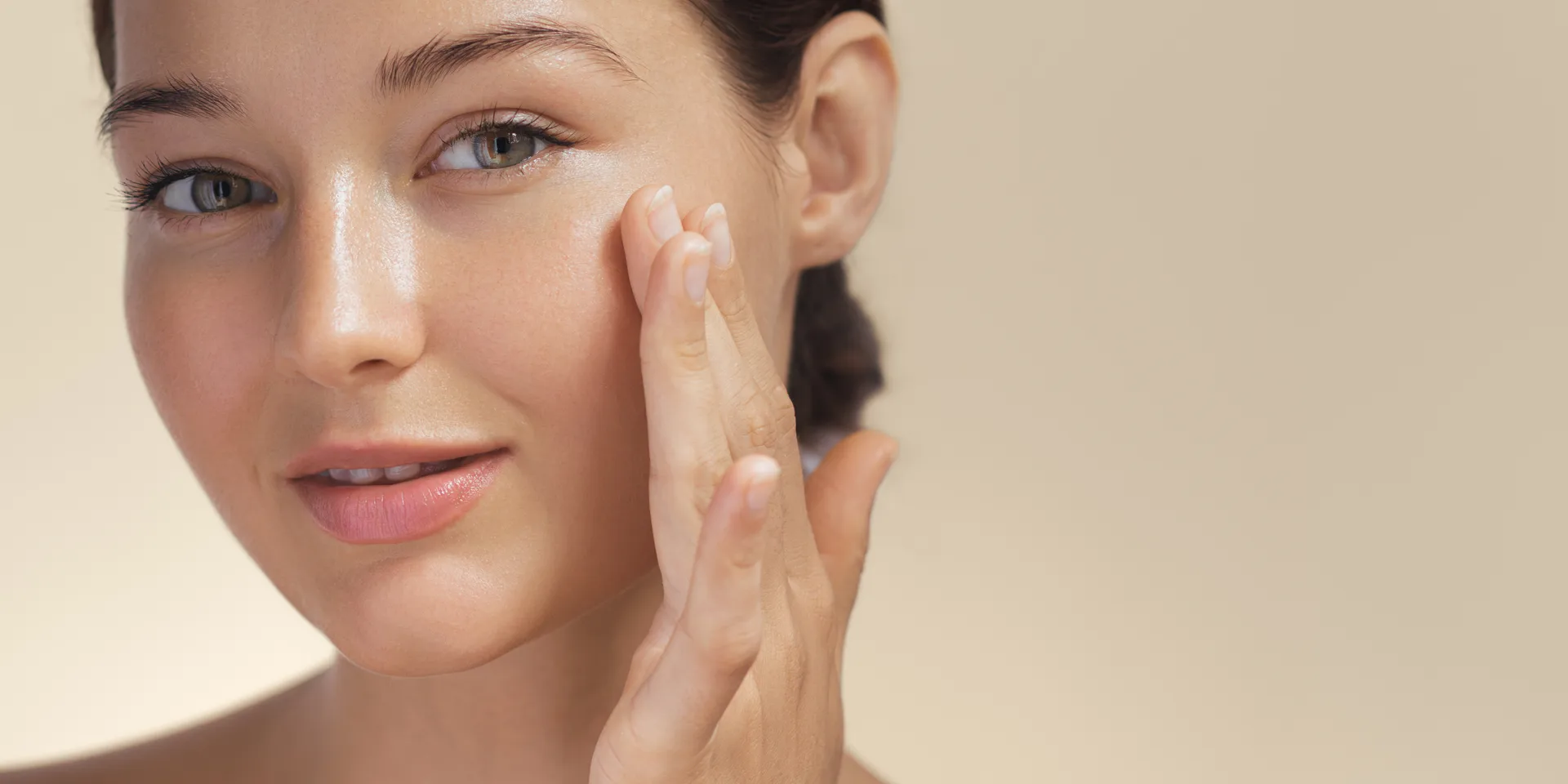
Most patients experience a refreshed, less tired-looking under-eye region — softer tear troughs, reduced under-eye bag prominence, and a smoother lid-cheek junction — that looks natural in repose and behaves naturally in animation. The lower eyelid lift is not designed to "erase" the under-eye region; it restores anatomical relationships rather than creating an unnatural smoothness.
Longevity for a well-executed lower blepharoplasty is favorable. Fat repositioning and conservative skin refinement tend to age gracefully because the operation works with the lower-lid's normal mechanics rather than against them. Many patients enjoy the result for a decade or more before considering any additional refinement, depending on skin quality, sun exposure, and overall facial aging. Adjunct treatments — neuromodulator for crow's feet, fillers in adjacent territories, resurfacing for skin texture — can extend and complement the surgical result over time.
The lower eyelid lift addresses the lower lid and tear trough specifically. It does not lift the brow, address upper-eyelid hooding, restore midface volume, or treat fine wrinkling outside the lid envelope. Concerns in those territories are addressed by other procedures in the practice's roster.
Risks & Considerations
Every surgical procedure carries risk. Lower blepharoplasty performed on appropriate candidates by a fellowship-trained facial plastic surgeon is generally well tolerated; serious complications are uncommon. The standard risk discussion includes:
- Bleeding and hematoma — uncommon; periorbital hematoma requires prompt evaluation when it occurs.
- Infection — rare given the rich vascular supply of the periorbital region.
- Lower-lid malposition — the most relevant procedure-specific risk. Without adequate lid support, post-operative ectropion, scleral show, or lid retraction can develop. This risk is meaningfully reduced by routine canthopexy, conservative skin removal, and approach selection appropriate to anatomy.
- Dry eye — temporary in most patients; persistent in a small minority. Pre-existing dry eye should be disclosed and worked up at consultation.
- Asymmetry, contour irregularities, or under-correction — minor differences are normal; significant issues occasionally warrant revision.
- Scarring — well-placed transcutaneous incisions typically settle into fine, near-invisible lines; transconjunctival approaches leave no external scar.
- Visual changes — extremely rare; serious vision changes are a recognized but very low-frequency risk of any periorbital surgery.
- Need for revision — a small percentage of patients pursue refinement; this is discussed honestly at consultation.
Patient-specific anatomical factors — orbital shape, scleral show, midface support, history of dry eye — meaningfully change the risk profile and are reviewed in detail at the in-person evaluation.
Questions about Lower Eyelid Lift / Blepharoplasty Bellevue?
Talk with Dr. Yang.
Frequently Asked Questions
Is a lower eyelid lift the same as filler for the under-eye region?+
No. Hyaluronic-acid filler in the tear trough is a non-surgical option for selected patients with mild hollowing and minimal fat herniation, but it does not remove or reposition orbital fat, address skin laxity, or correct lower-lid malposition. A lower blepharoplasty is the appropriate choice when there is true fat herniation, significant tear-trough volume change, or skin and muscle laxity. Filler and surgery can be sequenced or combined when anatomy supports it; the right decision depends on the individual under-eye picture.
Will I have a visible scar?+
A transconjunctival approach is performed inside the lower lid and leaves no external scar. A transcutaneous approach uses a fine subciliary incision just under the lash line that typically settles into a near-invisible mature line within 6 to 12 months. A skin-pinch incision falls in the same low-visibility position. Individual scar healing varies; patients with hypertrophic or keloid tendencies should disclose that history at consultation so the plan and aftercare can be calibrated.
How long does the recovery take before I can return to work?+
Most patients return to office or remote-meeting work between days 10 and 14. Bruising in the lower-lid region is visible early and migrates downward as it resolves; sunglasses are useful during transit through the second week. Reading, screen work, and most routine daily activity are usually comfortable well before the social-recovery threshold. Strenuous exercise resumes around week 2–3 for cardiovascular activity and week 6 for full unrestricted activity, per surgeon clearance.
Will my eyes look "different" after surgery?+
A well-designed lower blepharoplasty refreshes the lower-lid region without changing the fundamental shape or expression of the eye. Modern technique deliberately avoids over-resection of skin and fat — the changes that produced the hollowed, "operated-on" lower lids of older surgical eras. The goal is recognizable rest rather than altered identity. Lid support through canthopexy is part of preserving normal lid shape post-operatively.
What is the difference between a lower eyelid lift and an upper eyelid lift?+
They address different parts of the eyelid frame. An Upper Eyelid Lift corrects upper-eyelid hooding and excess upper-lid skin. A lower blepharoplasty addresses the under-eye region — bags, tear-trough hollowing, and lower-lid laxity. Many patients have findings in both regions and choose to address them together to consolidate recovery. The decision is made on anatomy and goals at consultation.
How long do the results last?+
A well-executed lower blepharoplasty tends to age gracefully because it works with — not against — lower-lid anatomy. Many patients enjoy the result for a decade or more before considering any additional refinement, depending on skin quality, sun exposure, and overall facial aging. Adjunct non-surgical treatments can extend and complement the surgical result over time.
What does a lower eyelid lift cost?+
Pricing depends on the specific surgical plan, anesthesia type, facility fees, and whether other procedures are combined (for example, an upper eyelid lift performed concurrently). The practice provides a clear, written surgical estimate after the in-person consultation, when the operative plan is finalized. Albert Yang Facial Plastic Surgery does not publish a single fixed price online because doing so would misrepresent the individualized nature of the surgical plan.
Serving Bellevue & the Eastside
Bellevue+
Albert Yang Facial Plastic Surgery is located in central Bellevue at 15600 NE 8th St, Suite A-8 — a zero-minute drive for in-city patients. Bellevue residents pursuing a lower eyelid lift typically schedule consultation, surgery, and the early postoperative visits within their normal commute, which simplifies the first week when icing routines, ointment instructions, and the day-5 to day-7 visit cadence matter most. The 10–14 day return-to-office window for lower blepharoplasty fits naturally into a Bellevue-based work-from-home stretch, with sunglasses providing comfortable transit camouflage in the second week.
Clyde Hill+
Clyde Hill is about 5–8 minutes from the Bellevue clinic — close enough that postoperative visits feel like brief errands. Clyde Hill patients pursuing a lower eyelid lift often use the practice's virtual consultation for the initial conversation, then come in for the in-person evaluation that always precedes any surgical decision. The brief commute supports scheduling surgery on a date that allows two weeks of private recovery before any planned travel, family, or social commitments — a useful margin given how visible bruising tracks downward in the lower-lid recovery curve.
Medina+
Medina is approximately 5–8 minutes from the practice's Bellevue clinic. Medina patients pursuing a lower blepharoplasty typically schedule an early-week surgical date so the first week of recovery — when bruising and swelling are most pronounced — happens privately at home. The day-5 to day-7 suture-removal visit is a brief outing, and the practice's virtual pre-op teaching is available where it streamlines the visit count. The lower eyelid lift's two-week social-recovery window integrates well with a Medina home-based recovery setup.
Issaquah+
Issaquah is about 15–20 minutes from the Bellevue clinic — the longest of the standard Eastside drives but still within a comfortable single-trip range for lower blepharoplasty care. Issaquah patients commonly consolidate consultation and pre-op into a single visit and use virtual check-ins for early-week postoperative touchpoints when appropriate. The lower eyelid lift's two-week return-to-office window is well suited to a recovery plan that limits total clinic trips. Albert Yang Facial Plastic Surgery is set up to support that consolidated cadence.
Mercer Island+
Mercer Island is roughly 8–12 minutes from the practice's Bellevue clinic via I-90. Mercer Island patients pursuing a lower eyelid lift commonly schedule the operation for an early-week date so the heaviest bruising resolves over the following weekend at home, with a short drive back for suture removal at days 5–7. Virtual pre-op teaching can replace one routine visit when bridge traffic is a concern. The procedure's two-week return-to-camera window is comfortable for most island-based professionals returning to remote-meeting work.
Sammamish+
Sammamish is roughly 12–18 minutes from the Bellevue clinic depending on traffic. Sammamish patients pursuing a lower blepharoplasty often consolidate consultation and pre-op into a single visit, then plan the operation for an early-week date so the heaviest recovery falls before the weekend. Virtual postoperative check-ins between week one and week two can substitute for one in-person visit when convenient. The two-week return-to-work threshold typical of the procedure aligns with most Sammamish patients' professional schedules.
Redmond+
Redmond is roughly 12–15 minutes from the Bellevue clinic — an easy commute for lower blepharoplasty consultation, surgery, and the standard postoperative cadence. Many Redmond-based patients work in flexible-schedule professions and find the procedure's two-week return-to-meeting window practical. Virtual consultations are available for the initial conversation; an in-person evaluation is always required before any surgical decision is made. The lower eyelid lift's relatively short downtime makes it a common choice among Redmond patients balancing recovery against family logistics.
Yarrow Point+
Yarrow Point is among the closest Eastside neighborhoods to the practice — about 5–7 minutes from the Bellevue clinic. The proximity is meaningful for lower blepharoplasty recovery, where same-day or next-day check-ins are easiest with a short drive. Yarrow Point patients frequently combine an in-person consultation with virtual pre-op teaching to minimize total visit count, then schedule the surgical day for an early-week date so the most acute first-week recovery happens privately at home.
Hunts Point+
Hunts Point is about 5–7 minutes from the Bellevue clinic — among the shortest commutes for lower eyelid lift care. The proximity simplifies the first 10 days of recovery, when periodic check-ins and the day-5 to day-7 suture-removal visit are easiest with a brief drive. Hunts Point's residential privacy suits the controlled, quiet recovery profile most blepharoplasty patients prefer, and the short distance to the clinic makes the practice's standard postoperative cadence essentially friction-free.
Kirkland+
Kirkland is about 12–15 minutes from the Bellevue clinic via I-405. Kirkland patients pursuing a lower eyelid lift typically schedule an early-week surgical date and plan for two full weeks of low social exposure before resuming work and routine activities. Postoperative visits — most often at days 1, 5–7, and around week 2 — fit neatly into a Kirkland morning or afternoon errand pattern. The practice's virtual consultation option is useful for Kirkland patients who prefer to begin the conversation remotely before committing to a clinic visit.
Related Procedures
Patients evaluating a lower eyelid lift in Bellevue often consider these closely related procedures within the practice's facial-surgery roster.
Upper Eyelid Lift
Addresses upper-eyelid hooding and excess skin; commonly combined with lower blepharoplasty when both regions are concerns.
Facial Fat Transfer
Restores midface and tear-trough volume using the patient's own fat; a useful adjunct or alternative when volume loss is a dominant component of the under-eye picture.
Endoscopic Brow Lift
Addresses brow descent that can contribute to upper-lid heaviness and the overall periorbital aesthetic.