
Earlobe Repair Bellevue
Earlobe repair in Bellevue is a precise, in-office reconstructive procedure that restores a split, stretched, or torn earlobe to a natural shape.
 [ PROCEDURE · OVERVIEW ]
 What is Earlobe Repair Bellevue?
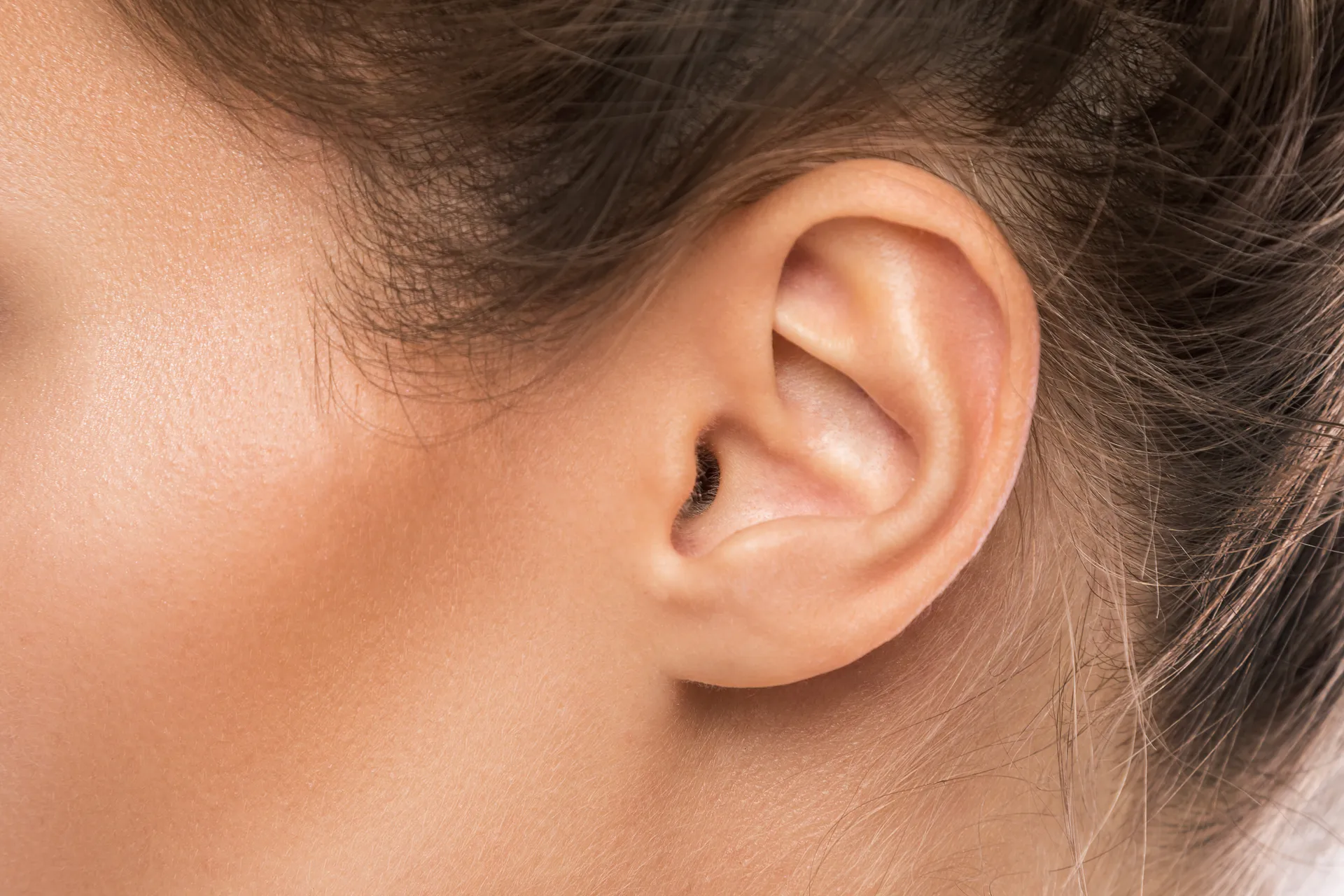
Earlobe repair is a category of small reconstructive procedures that addresses a spectrum of problems: a torn earlobe (acute or healed split from earring trauma), a stretched piercing channel (the original hole has elongated downward but is still continuous), a deformed earlobe from previous repair, and a gauged earlobe (an intentionally stretched piercing that the patient now wishes to close). The technical name is sometimes given as earlobe reconstruction or earlobe repair surgery; both refer to the same family of procedures.
The clinical reality is that no two earlobe problems look exactly alike. Some patients arrive with a clean linear split through a heavy-earring channel; others have a thin "keyhole" elongation that hasn't yet broken through; others have a wide gauge channel an inch across with thinned, scarred skin. Each pattern calls for a slightly different repair strategy.
At the Bellevue practice, earlobe repair is positioned as a precise, anatomy-led procedure performed in the office under local anesthesia. Dr. Yang's approach mirrors current best-practice convention: excise unhealthy or scarred tissue along the defect, freshen the edges, and close the lobule in layers so the inner architecture of the lobule is restored — not just the surface skin. The objective is a repaired earlobe that reads as the patient's own and that is structurally durable enough to consider re-piercing later if desired.
Ideal Candidates
Earlobe repair in Bellevue is most often considered by adults whose earlobe shape has been changed by piercings, earring trauma, or healed gauges. Common patient descriptions include "my earring tore through and the lobe is split," "the hole has stretched and earrings sit sideways," "my piercing channel is so elongated it's almost broken through," or "I closed my gauges and now I want the lobe shape restored." Albert Yang, MD evaluates the defect type, surrounding skin and cartilage condition, scar history, and overall lobule contour at consultation.
Patients who are not ideal candidates without additional planning include those with active infection in the earlobe (treat first), patients with a history of keloid scarring at the earlobe (a separate keloid removal plan with adjunct treatment may be more appropriate), patients on blood thinners that cannot be held safely, and patients with poorly controlled diabetes or other conditions that interfere with healing. Patients with a strong personal or family history of keloid formation should discuss adjunctive measures — such as postoperative steroid injection, pressure therapy, or radiation in select cases — to manage that risk. The right plan acknowledges keloid risk explicitly rather than ignoring it.
The consultation also helps differentiate isolated earlobe repair from a combined plan. Patients with prominent ears who also want shape correction (typically protrusion of the auricle) are often better served by combining earlobe repair with otoplasty so anesthesia and recovery are consolidated. Patients with multiple ipsilateral or bilateral defects can have all of them addressed in a single session. The right plan is the smallest cohesive procedure that delivers the result.
The Procedure & Technique
Earlobe repair at the Bellevue practice is typically performed in the office under local anesthesia. Operative time depends on complexity — a clean linear repair takes 30 to 45 minutes per side; a wide gauge closure or a complicated multi-channel repair takes 45 to 75 minutes per side.
After local anesthetic infiltration, the defect edges are evaluated. Dr. Yang's approach mirrors the standard technique for earlobe repair: any unhealthy, scarred, or thinned tissue along the defect margin is conservatively excised so the closure is performed on healthy, well-vascularized edges. For a simple split or thin keyhole defect, this is a straight-line excision and layered closure. For a wider stretched channel, a small wedge of tissue is excised to bring the edges together without tension. For a gauge-closure repair, more tissue may need to be removed and the lobule may be reconfigured with a small Z- or W-plasty technique to break up the line of the scar and restore the natural lobule contour.
Closure is performed in layers — deeper sutures restore the inner architecture of the lobule (the fibrofatty bulk that gives a natural lobe its shape) before fine skin sutures close the surface. Suture choice and placement are dictated by what will heal cleanest with the least visible scar. Anti-tension closure technique reduces the chance of a hypertrophic or thickened scar.
If the patient has a history of keloid formation or there is concern about keloid risk, Dr. Yang may recommend an intralesional steroid injection at the time of repair or at follow-up; in select higher-risk cases, additional measures are discussed in advance.
Considering Earlobe Repair Bellevue in Bellevue?
Recovery & Timeline
Recovery from earlobe repair in Bellevue is typically gentle. Most patients return to normal activities the same day, with mild soreness and a small dressing or bandage over the lobe for the first 24 to 48 hours. Discomfort is generally well controlled with acetaminophen.
By day 5 to 7, sutures are removed at a follow-up visit (or fall away if absorbable sutures were used). The incision line is pink, slightly raised, and closing well in most patients. Most patients are entirely comfortable in social and professional settings during this period — the dressing is small, the discomfort is mild, and the area is easy to keep covered if desired.
By two weeks, the incision line is well sealed and most patients can resume normal activities including light exercise. Strenuous exercise, swimming, and sleeping pressure on the repaired side are generally restricted for an additional one to two weeks to protect the closure.
Between weeks four and twelve, the scar continues to mature — moving from pink and slightly firm toward a soft, pale line that follows the natural contour of the lobule. Sun protection of the scar during this period meaningfully improves long-term appearance. If the patient and surgeon agree to consider re-piercing the lobe, the typical wait is at least 8 to 12 weeks after surgery, often longer, and the new piercing is placed deliberately away from the previous channel and the scar to avoid weakening either.
 [ EXPECTED RESULTS ]
 Expected Results
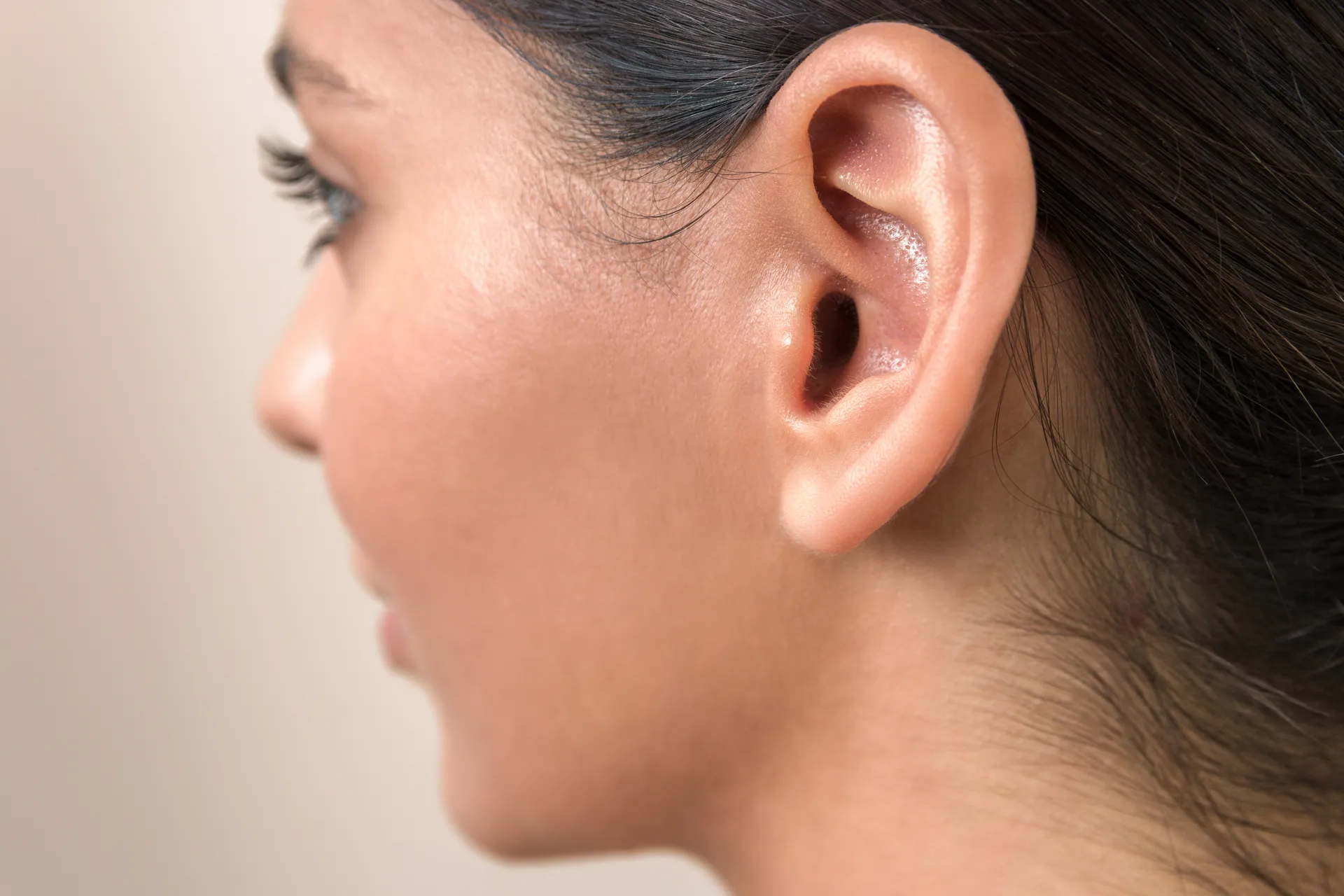
Most patients who undergo earlobe repair with Albert Yang, MD experience a fully repaired lobule that reads as the patient's own — the split closed, the lobule contour restored, and the scar refining into a faint line that is generally difficult to identify in normal social interaction. Functional outcomes are equally important: a properly repaired earlobe restores the option to wear earrings if desired, with a fresh piercing placed at a later, separately planned appointment.
In terms of longevity, results from earlobe repair are typically considered permanent. The repaired lobule does not "re-tear" spontaneously; future tearing is generally the result of new trauma. Patients who choose to re-pierce should consider lighter earrings, avoid heavy or pulling earring designs, and be cautious during sleep and sport.
Outcomes vary based on starting tissue quality, scar history, healing characteristics, and adherence to postoperative instructions. Dr. Yang frames expectations around what is realistic for the individual lobule at consultation rather than around generalized averages and is candid about scar visibility, the time required for the scar to mature, and any keloid-risk considerations.
Risks & Considerations
Every surgical procedure carries risk, and earlobe repair is no exception. Common, generally self-limited issues include early swelling and minor bruising; transient discomfort; mild asymmetry between repaired and unrepaired lobes that often refines as the scar matures; and a pink or raised scar in the early weeks that softens with time.
Less common but recognized risks include hypertrophic scarring (a thickened scar) and, in predisposed patients, keloid formation — a more aggressive scar response that grows beyond the original wound margins. Patients with personal or family history of keloid scars at the earlobe carry meaningfully elevated risk; the practice's preoperative discussion includes this explicitly and may recommend adjunctive steroid injection or other measures. Other recognized risks include wound infection (uncommon when standard sterile technique and postoperative care are observed), wound dehiscence (rare with layered closure and reasonable activity restriction), suture-track marks if non-absorbable sutures are not removed in time, and lobule asymmetry that may benefit from minor revision.
Realistic expectation-setting is part of risk management. Earlobe repair restores the lobule and creates a healed scar; it does not make the original injury invisible. Most well-executed repairs are difficult to identify socially, but a careful look in good lighting can usually find the line. Patients with high keloid risk should treat the procedure as part of an adjunctive plan rather than as a single intervention.
Questions about Earlobe Repair Bellevue?
Talk with Dr. Yang.
Frequently Asked Questions
Is earlobe repair done in the office or in an operating room?+
Earlobe repair is almost always performed in the office under local anesthesia. The procedure is short, the anesthesia profile is gentle, and the recovery is straightforward — there is rarely a reason to bring it into a surgical center unless it is being combined with another procedure that warrants sedation or general anesthesia. The Bellevue practice performs earlobe repair in the office for nearly all patients.
Will the scar be visible after earlobe repair?+
A well-executed earlobe repair leaves a fine line that follows the natural contour of the lobule and is generally difficult to identify in normal social interaction. A careful look in good lighting can usually find the line. Scar maturation takes three to twelve months. Sun protection during the healing window, careful wound care, and patient skin type all influence the final appearance.
Can I re-pierce my earlobe after repair?+
Yes, most patients can re-pierce a repaired earlobe, generally after waiting at least 8 to 12 weeks (often longer) to allow full scar maturation. The new piercing is placed deliberately away from the original channel and the scar to avoid weakening either area. Lighter earrings — and avoiding heavy or pulling designs — meaningfully reduce the risk of repeat tearing.
How long does earlobe repair recovery take?+
Most patients return to normal activities the same day. Sutures are removed at day 5 to 7, light exercise resumes around two weeks, and full unrestricted activity (including swimming and contact sport) typically resumes by three to four weeks. Scar maturation continues over three to twelve months. Recovery is gentle compared with most facial procedures.
What if I have a history of keloids?+
Patients with personal or family history of keloid scarring at the earlobe carry a meaningfully elevated risk that the surgical scar will respond similarly. The Bellevue practice addresses this explicitly at consultation and may recommend adjunctive measures such as intralesional steroid injection at the time of repair or at follow-up, pressure therapy, or — in select higher-risk cases — additional approaches. The right plan acknowledges keloid risk rather than ignoring it.
Can I have multiple earlobe defects repaired in one session?+
Yes. Multiple defects on one earlobe, bilateral defects, or a combination of split and stretched defects can all typically be addressed in a single in-office session. The practice consolidates repairs where the anesthesia, time, and recovery profile remain reasonable. Larger gauge closures may benefit from staged work in some patients.
What is the difference between earlobe repair and otoplasty?+
Earlobe repair addresses defects of the lobule — the soft, fleshy lower portion of the ear — typically caused by piercings, trauma, or healed gauges. Otoplasty addresses the shape and projection of the auricle (the cartilaginous portion of the ear). The two procedures address different anatomy. They can be combined in a single session when both concerns are present.
Serving Bellevue & the Eastside
Earlobe repair at Albert Yang Facial Plastic Surgery serves patients across the Eastside. The practice is located at 15600 NE 8th St, Suite A-8, Bellevue, WA 98008. Drive times below reflect typical non-rush conditions to the Bellevue clinic.
Bellevue+
Bellevue patients reach the clinic in minutes, which makes earlobe repair particularly convenient — the procedure is in-office under local anesthesia, the visit is short, and the day-7 suture-removal check fits easily around in-city routines. Bellevue residents who want to consolidate consultation, repair, and follow-up into a tight schedule benefit from the proximity, and the discreet nature of in-office earlobe repair means most patients return to normal activities directly from the clinic.
Clyde Hill+
Clyde Hill is a 5- to 8-minute drive to the Bellevue practice. Earlobe repair candidates from Clyde Hill often appreciate that the procedure is done in-office under local anesthesia rather than in a surgical center — the visit is short, the recovery is gentle, and follow-up is a single brief appointment. For Clyde Hill patients with keloid risk, the proximity supports the longer-term injection or pressure-therapy plan that may accompany the surgical repair.
Medina+
Medina is 5 to 8 minutes from the Bellevue practice. Patients considering earlobe repair in Bellevue from Medina value the short drive on the day of the procedure and during follow-up. The practice maintains a calm, private clinic environment for patients who prefer discretion during the visible early-healing phase. For Medina patients with multiple defects or bilateral repairs, the practice can address them in a single in-office session to consolidate recovery.
Issaquah+
Issaquah patients reach the Bellevue clinic in roughly 15 to 20 minutes via I-90. For earlobe repair candidates, this is well within the comfortable range for an in-office procedure under local anesthesia and a brief follow-up. Issaquah patients often combine the consultation and procedure planning on a single trip to limit travel during the planning phase, then return for the procedure and a single suture-check visit.
Mercer Island+
Mercer Island patients reach the Bellevue clinic in roughly 8 to 12 minutes via I-90, making earlobe repair consultations and the day-of-procedure visit straightforward. Because the procedure is performed under local anesthesia, most Mercer Island patients can drive themselves home if they prefer, though many find a planned ride more comfortable. The single follow-up visit at day 5 to 7 is a brief in-and-out appointment that fits easily around local routines.
Sammamish+
Sammamish patients reach the Bellevue clinic in roughly 12 to 18 minutes via I-90 or SR-202. Earlobe repair is typically a single in-office visit for the procedure followed by one short suture-check visit at day 5 to 7. Sammamish patients often combine the consultation and the repair across two trips, with virtual review available for later check-ins if the scar is healing on track and no adjunctive treatment is planned.
Redmond+
Redmond patients reach the Bellevue clinic in approximately 12 to 15 minutes via SR-520. Earlobe repair consultations are typically scheduled in a single block to reduce travel. The procedure itself is in-office under local anesthesia with a short visit; the day-7 suture-removal check is similarly brief. Virtual follow-up is available for Redmond patients in later weeks once scar maturation is on track and no adjunctive treatment is planned.
Yarrow Point+
Yarrow Point sits roughly 5 to 7 minutes from the Bellevue clinic, an easy approach for earlobe repair consultations and the in-office procedure. Yarrow Point patients typically schedule the consultation, the repair, and the suture-removal check across separate short visits. For patients managing keloid risk and pursuing adjunctive steroid injections at the practice over several months, the proximity makes the maintenance schedule simple to keep.
Hunts Point+
Hunts Point is approximately 5 to 7 minutes from the Bellevue clinic by car. The proximity is well suited to earlobe repair, which involves a short in-office procedure and a single brief follow-up. Hunts Point patients can keep the visit windows tight and return to local routines immediately after the repair. For patients pursuing adjunctive steroid injections to manage keloid risk, the short drive supports the necessary cadence over several months.
Kirkland+
Kirkland is roughly 12 to 15 minutes from the Bellevue clinic via I-405. Earlobe repair candidates from Kirkland often prefer to schedule the procedure outside peak commuting hours; the practice accommodates these requests where possible. For Kirkland patients with keloid risk who require periodic steroid injections, the practice maintains a follow-up schedule that fits around work and travel.
Related Procedures
If you are considering earlobe repair, the practice often discusses adjacent options that may complete the ear or scar plan.
Otoplasty
For prominent or asymmetric ears; addresses the cartilaginous auricle rather than the lobule.
Scar Revision
For visible facial or body scars beyond the earlobe that benefit from refinement.
Keloid Removal
Specifically for keloid scars (including earlobe keloids), with an adjunctive treatment plan to reduce recurrence.